


Sine Scientific Instruments
Lock-in Amplifier

Applications

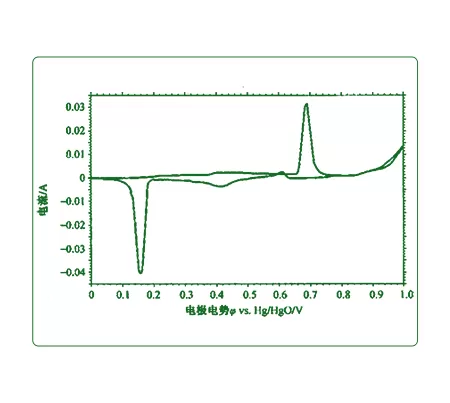
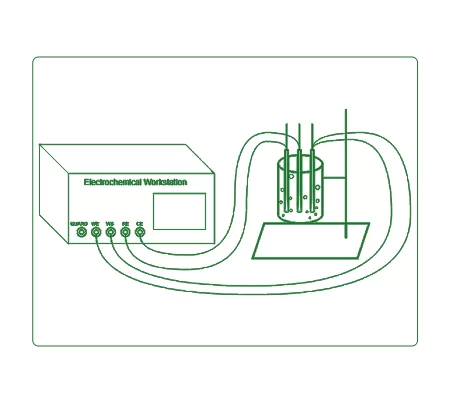
Cyclic Voltammetry to Test Electrochemical Reactions of Metals in Solution
Cyclic voltammetry refers to controlling the potential under study to scan from the initial potential to the reverse potential at a constant speed, changing the scanning direction, scanning back to the initial potential at the same speed, and continuing to reverse the potential, repeatedly scanning, and recording the current-potential The curves are called cyclic voltammetry lines.
Learn More
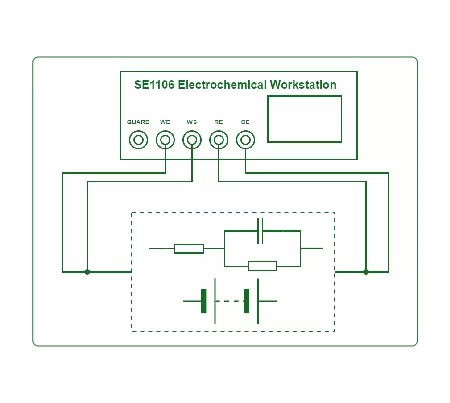
Analysis Of Electrochemical Reactions In Lithium-Ion Batteries By The AC Impedance Method
The AC impedance method is also known as electrochemicalim pedance spectroscopy (EIS) when applied to electrochemical systems. The method involves controlling the current (or potential) through an electrode to vary sinusoidally with time under small amplitude conditions, and simultaneously measuring the pattern of variation of the electrode potential (or current) with time as its response, or directly measuring the AC impedance (or conductance) of the electrode.
Learn More
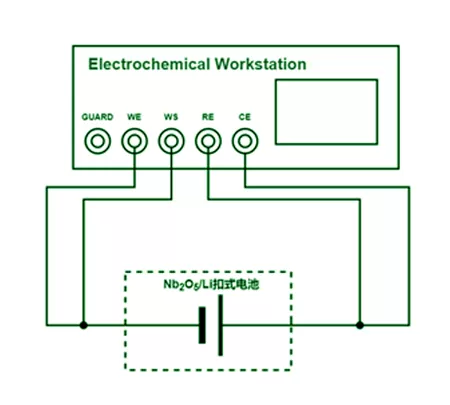
Cyclic Voltammetry To Test Lithium Storage Behaviour Of Electrode Materials With Pseudocapacitor
Cyclic voltammetry has been widely used in electrochemical research due to its features of simple experiment, abundant information and theoretical analysis. For example, it can be used to quantitatively analyse the peak current, qualitatively analyse the peak potential difference, determine the reversibility of electrode processes, explore the electrochemical behaviour of unknown electrochemical systems, and apply it in various fields of applied electrochemistry.
Learn More
Measurement And Analysis Of Hydrogen Precipitation From Aqueous Solutions
The precipitation of hydrogen is the most common reaction in the aqueous solution system, is the basic reaction of electrolysis of water, but also the secondary battery charging process, electroplating process is often accompanied by side reactions, therefore, is a common and important reaction in the electrochemical system.
Learn More
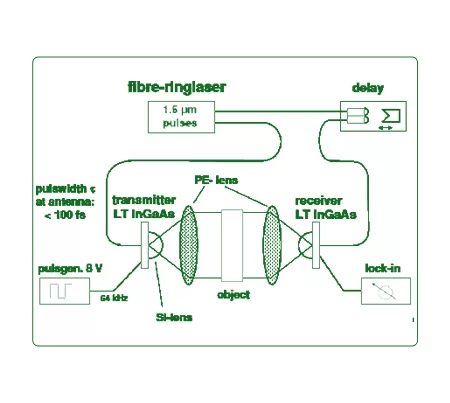
Terahertz Time Domain Spectroscopy and Frequency Domain Spectroscopy
Terahertz time-domain spectroscopy characterizes material properties by measuring complex responses in the frequency range from terahertz to tens of terahertz. In this frequency band, various resonance phenomena such as electron and phonon excitations in solid materials are usually observed.
Learn More
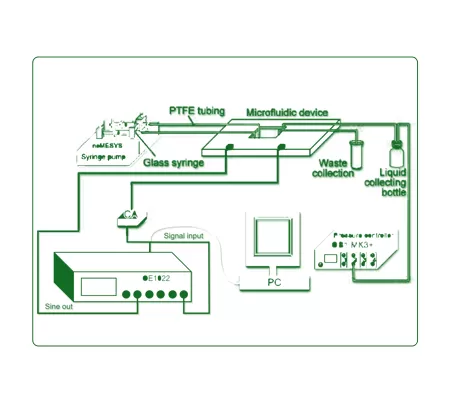
Microfluidic Electrical Impedance Spectroscopy Measurements
Microfluidics, as a technology for manipulating micro-volume fluids at microscopic scales, is an emerging interdisciplinary subject involving the fields of micromechanics, fluids, physics, materials, biology, chemistry and biomedicine. Because of the characteristics of miniaturization and integration, microfluidic devices are often referred to as microfluidic chips, also known as Lab on a Chip and micro-Total Analytical System ( μTAS ).
Learn More
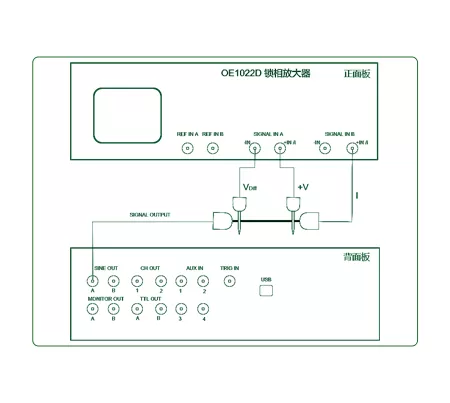
Electrical Transport Measurements
Electrical transport measurements are a fundamental materials characterization technique that can provide insight into the scattering mechanisms and band structure of solid-state materials. As described in quantum mechanics, macroscopic carrier transport is one of the most fundamental concepts of electronic material properties, with significant gate-tunable effects in low-dimensional systems and at low temperatures.
Learn More
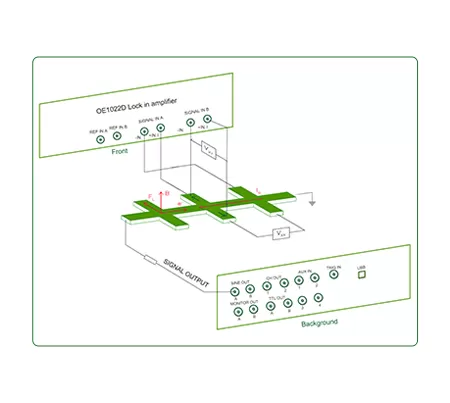
Hall Effect Measurement
The Hall effect is a kind of electromagnetic effect. When the current passes through the semiconductor perpendicular to the external magnetic field, the carriers are deflected, and an additional electric field is generated perpendicular to the direction of the current and the magnetic field, thereby generating a potential difference between the two ends of the semiconductor. The phenomenon is the Hall effect. The Hall effect is widely used in material characterization and magnetic field sensing.
Learn More
Electron Paramagnetic Resonance Measurement
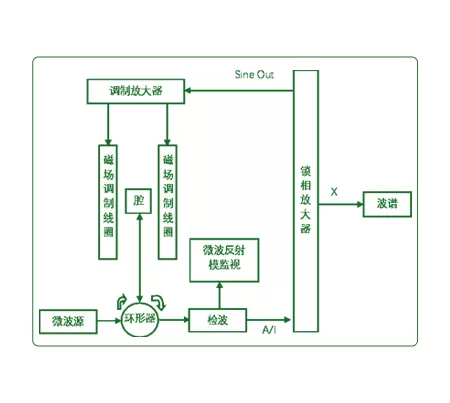
Electron paramagnetic resonance (EPR) or electron spin resonance (ESR) is one of the most informative techniques for the electronic structure of paramagnetic materials.EPR spectroscopy is particularly useful for studying chemical systems with strong local spin densities and their interactions with the environment.
Learn More
Application in Metal Material Tension Test
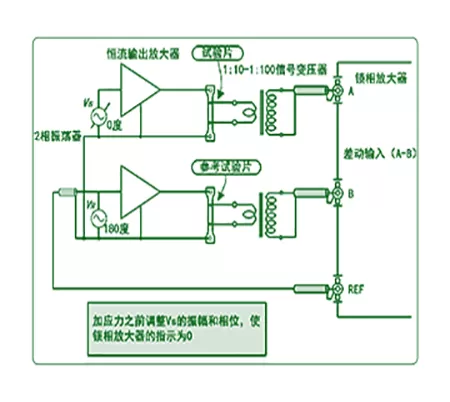
Tensile tests are to be carried out when evaluating the strength of metallic materials. In order to detect small changes in metal cracks or shape, you can measure the AC resistance of sample (called AC potential method).
Learn More
Contact Us
* Type of Request
To know how we use it and what choices you have, please read our Privacy Policy.