

+86 20 84133345
+1 781 218 9688

What are you looking for?

Core materials used in making transformers exhibit B-H characteristics due to magnetic saturation.
In order to determine the B-H characteristics, make the AC flow through the core, and then superimpose on the DC, then the second harmonic will produce on the secondary side.
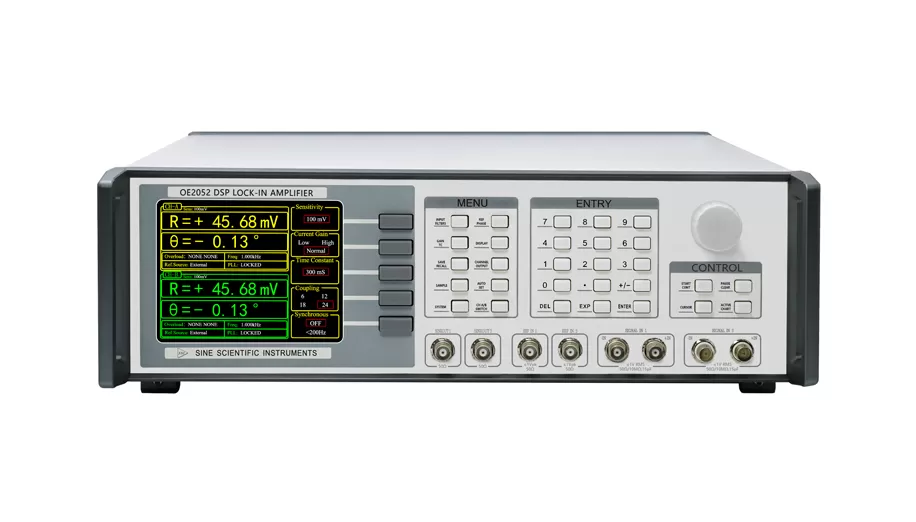
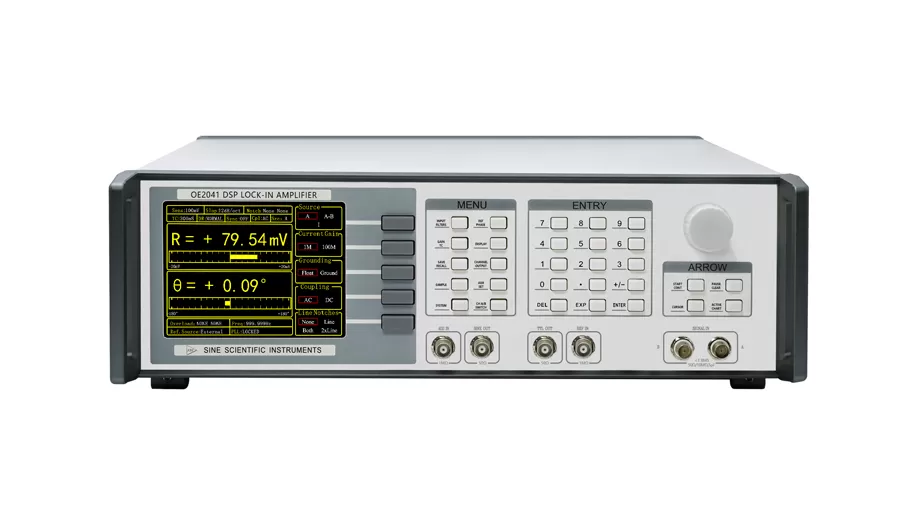
Apply this principle to detect the second harmonic using the 2F mode of the lock-in amplifier. If this is fed back to the transformer as an inverse DC, the system will always be able to correct the lock-in amplifier so that it does not produce second harmonics. Therefore, the modified phase-locked amplifier DC current flow and DC equal to the lock-in amplifier by measuring the output, you can measure the current.
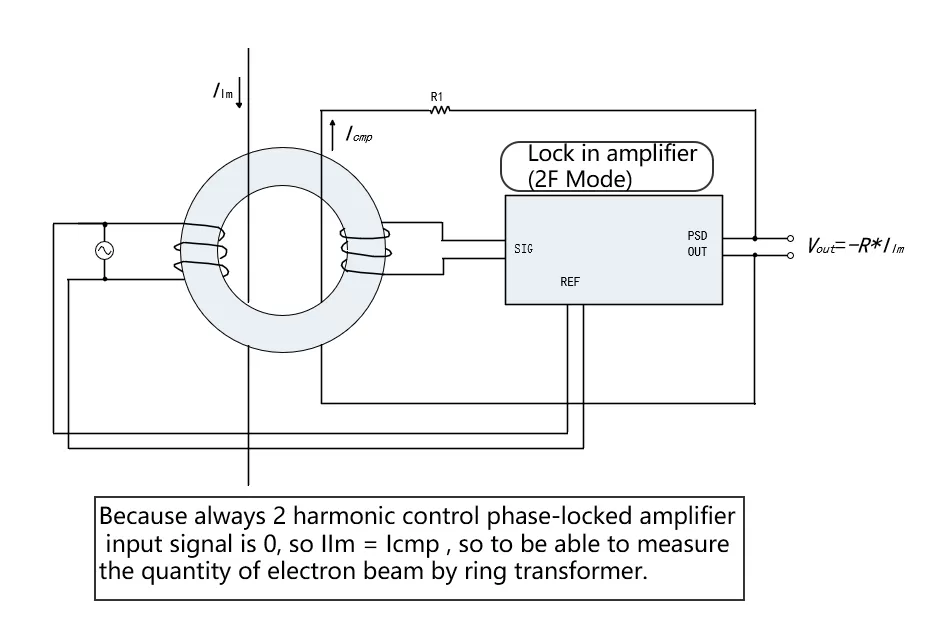
Since the phase-locked amplifier becomes part of the feedback loop, the system becomes unstable if there is a factor of two hysteresis. Therefore, the LPF(low pass filter) following the PSD should be used at 6dB/ OCT so that no lag of more than 900 occurs in the phase-locked amplifier.
You might want to do this in filter and diode detection circuits, but it doesn't work because you can't get positive and negative information in normal detection circuits. Here, the characteristics of phase - sensitive detection circuit are effectively utilized.
When direct current flows through a conductor, there is no need for such a complex system. But it is a useful method for measuring particle beams of electrons, protons, ions, etc.