




+86 20 84133345
+1 781 218 9688

What are you looking for?
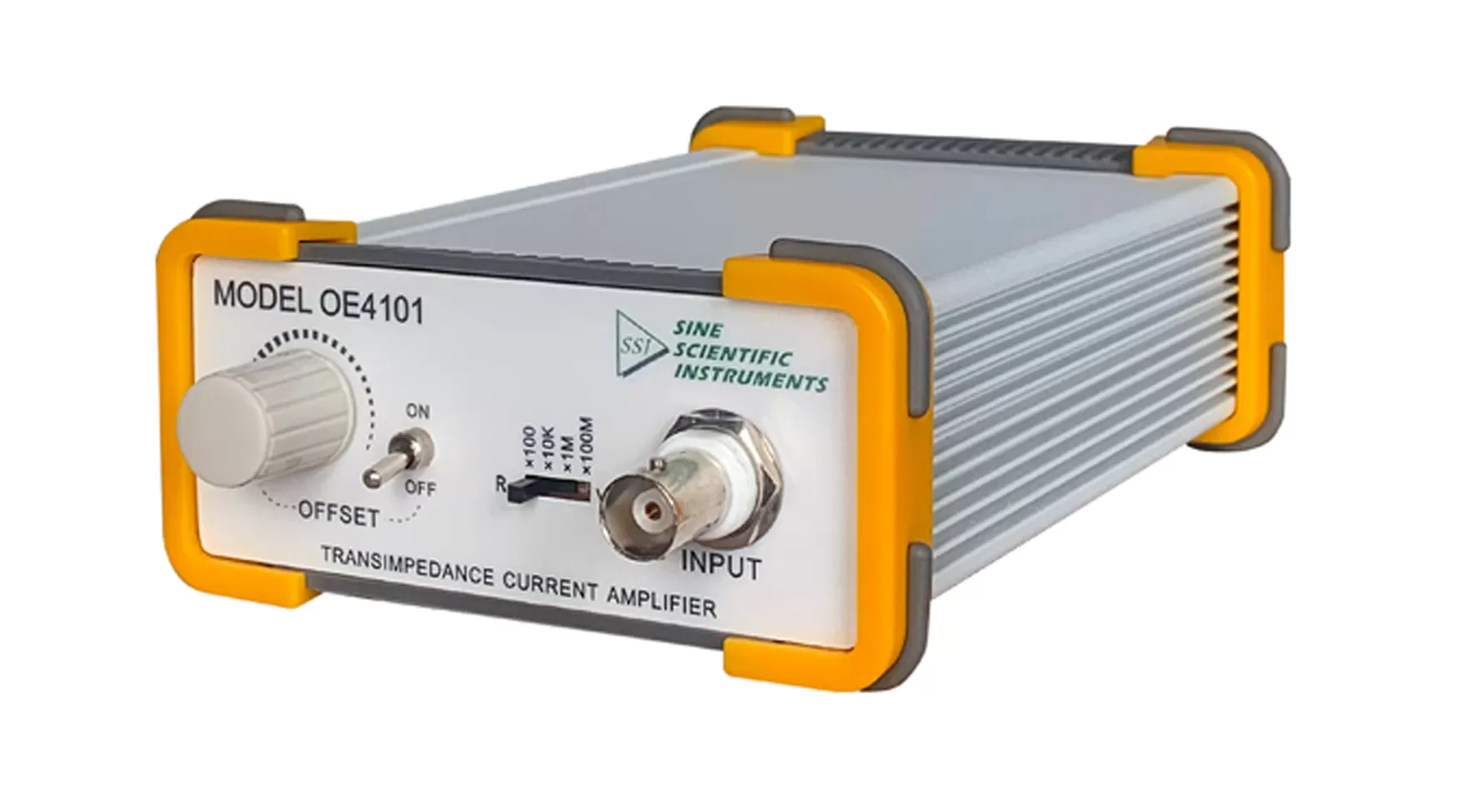
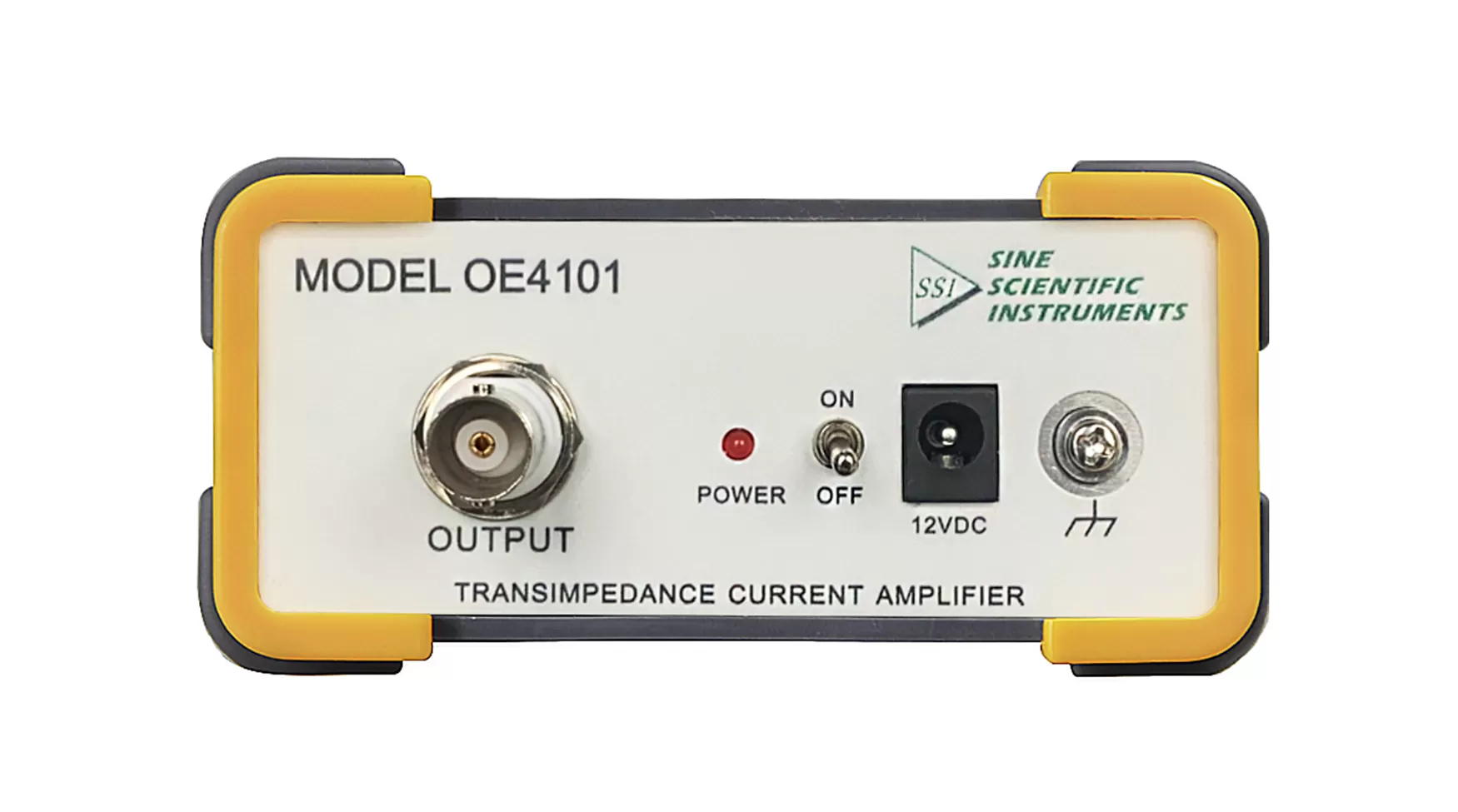
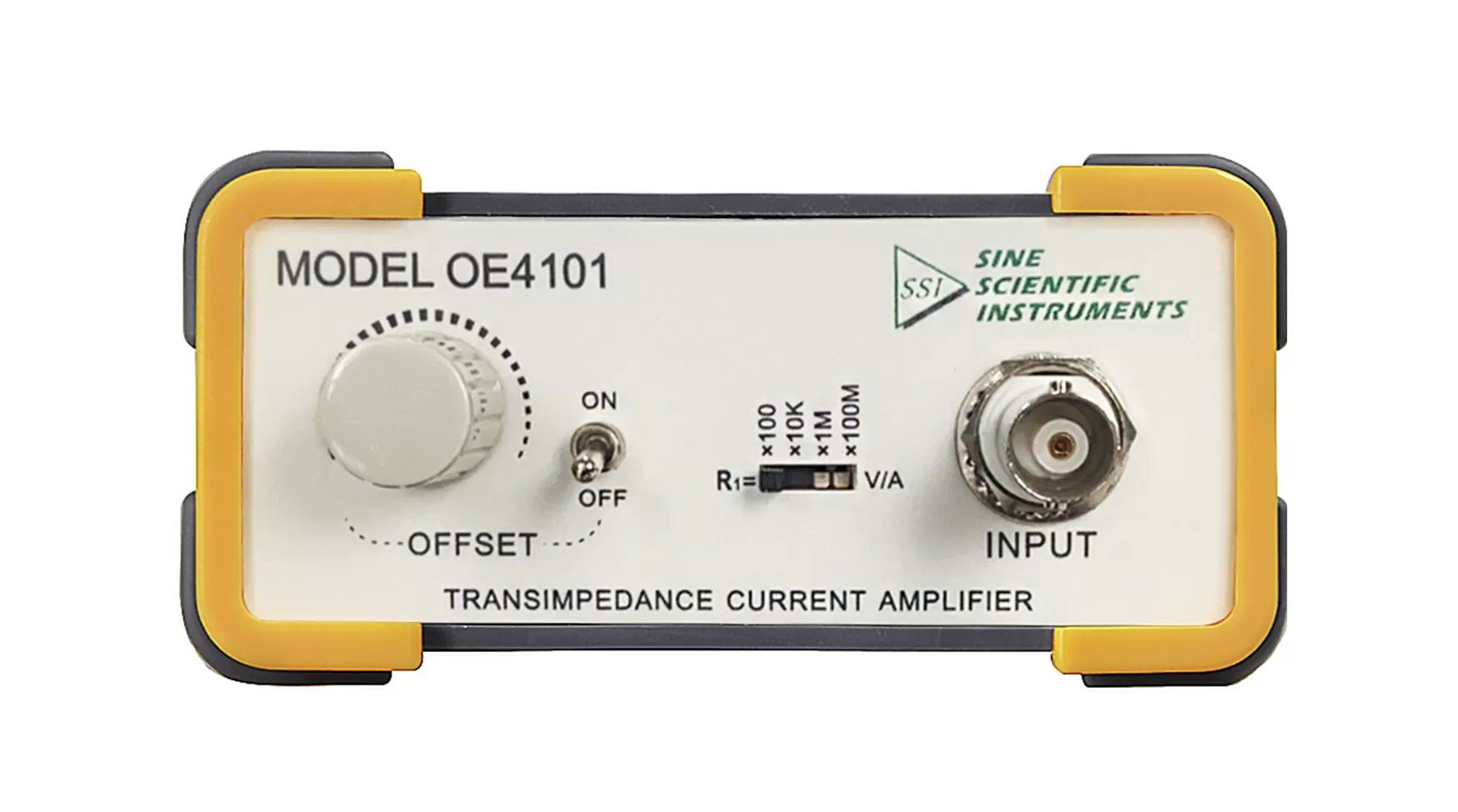
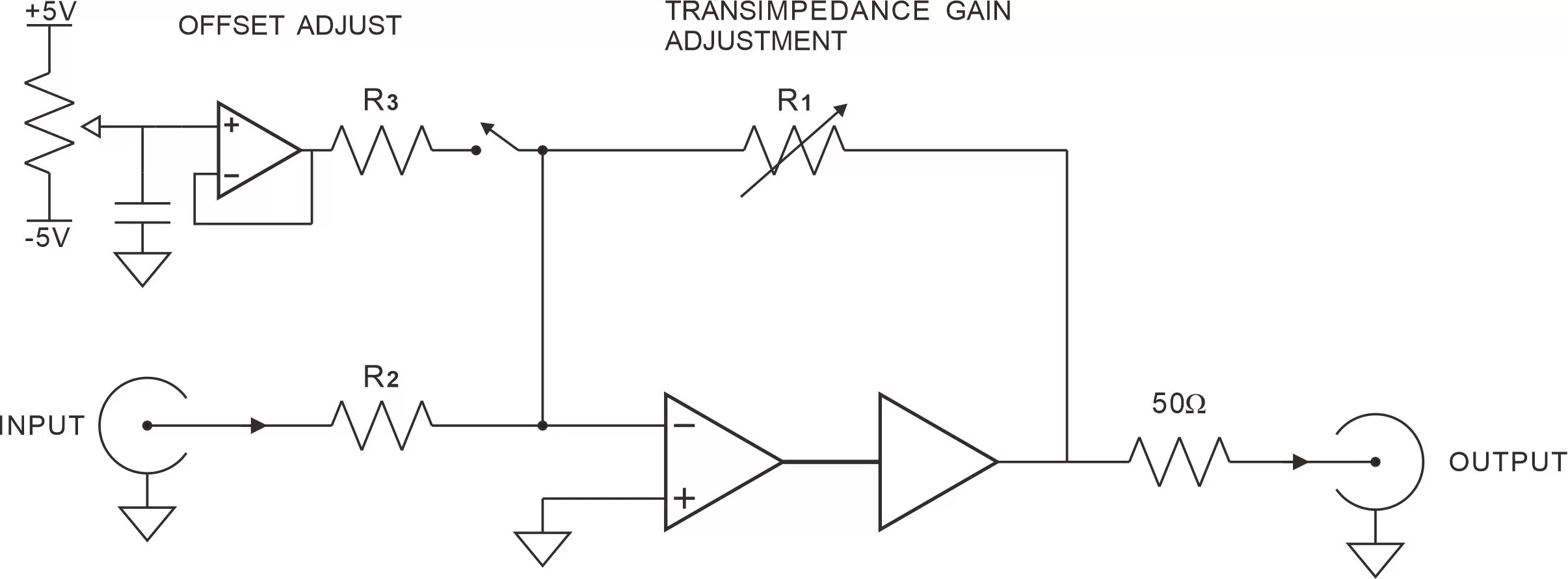
The OE4101 is a transimpedance current pre-amplifier that utilizes a negative feedback structure to convert input current to voltage using a feedback resistor and to control amplification.
The OE4102 detects current by measuring the voltage drop across a resistor on the input current channel, amplifies and outputs a voltage signal proportional to the measured current.
60fA/√Hz input current noise
100V/A,10kV/A, 1MV/A, 100MV/A current transimpedance gain
Wide range, high resolution bias adjustment
| Dimension | 102*176*49(mm) |
| Weight | 0.3kg |
| Storage temperature | -20 ℃ to 65 ℃ |
| Operating temperature | 5 ℃ to 40 ℃ |
| Power supply | 12V/1A |
| Maximum power consumption Approx | 4.3W |
Test conditions: supply voltage = 12V, ambient temperature = 25°C, input current 10mA-10nA, gain steps 100V/A-100MV/A, 0.5m BNC coaxial cable connection.
Note: [1]. Refer to Table 3 for the maximum input current range of the input signal of each gain stage; among them, use BNC converter to connect to the measuring instrument to reduce the load capacitance for the 100V/A stage, and use 0.5m BNC cable for the other stages.
[2].The OE4101 is used as a negative feedback amplifier, the output signal is in opposite phase to the input signal.
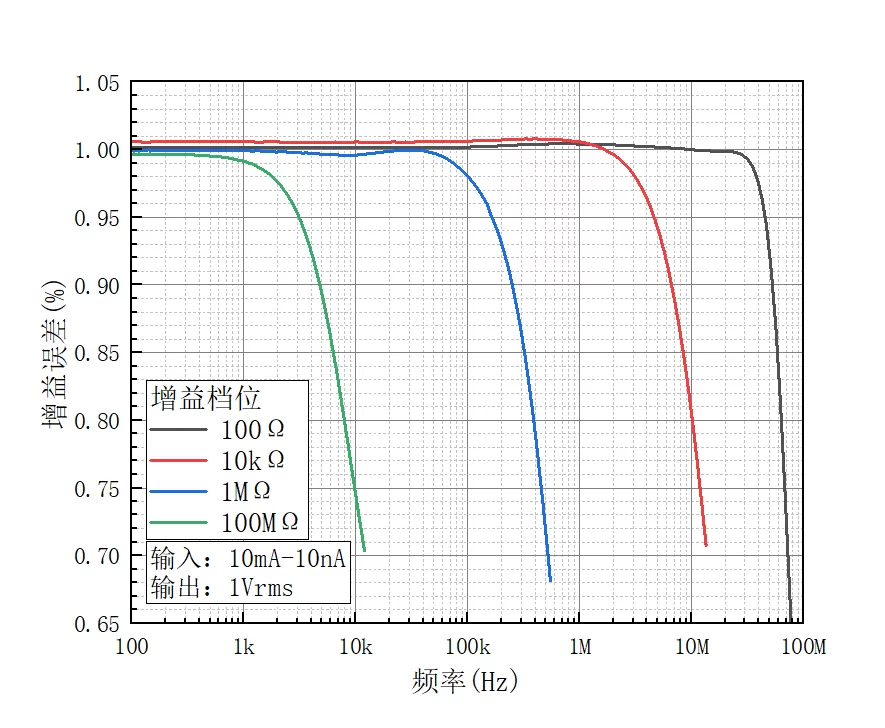
Fig.1 Gain error-frequency curve
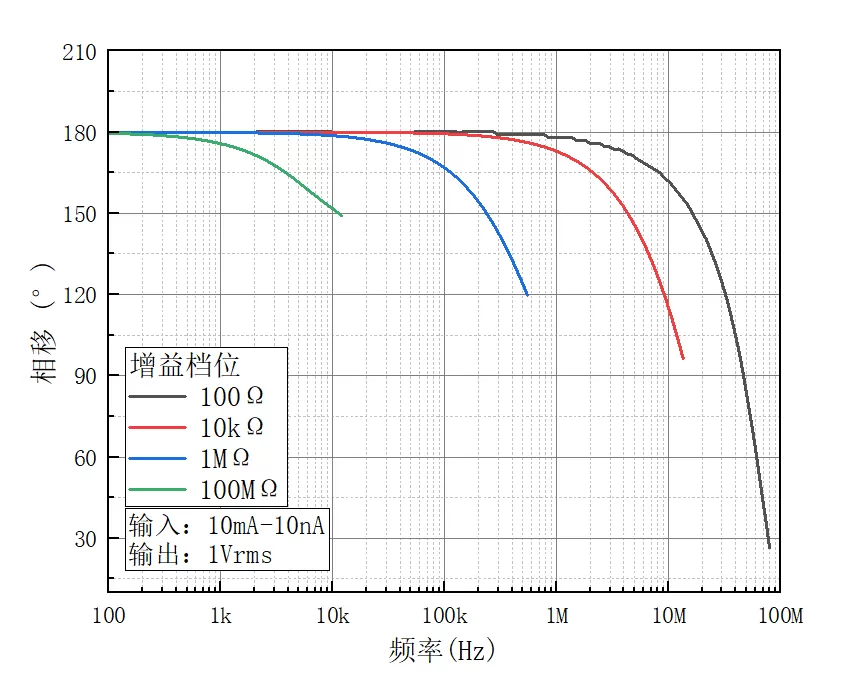
Fig.2 Phase shift-frequency curve
| File name | Explain | Size | Version number | Download |
| OE4102 Introduction Document | Product Introduction Document of OE4102 Current Amplifier. | 1508kb | v250421 |
Download
|