




+86 20 84133345
+1 781 218 9688

What are you looking for?
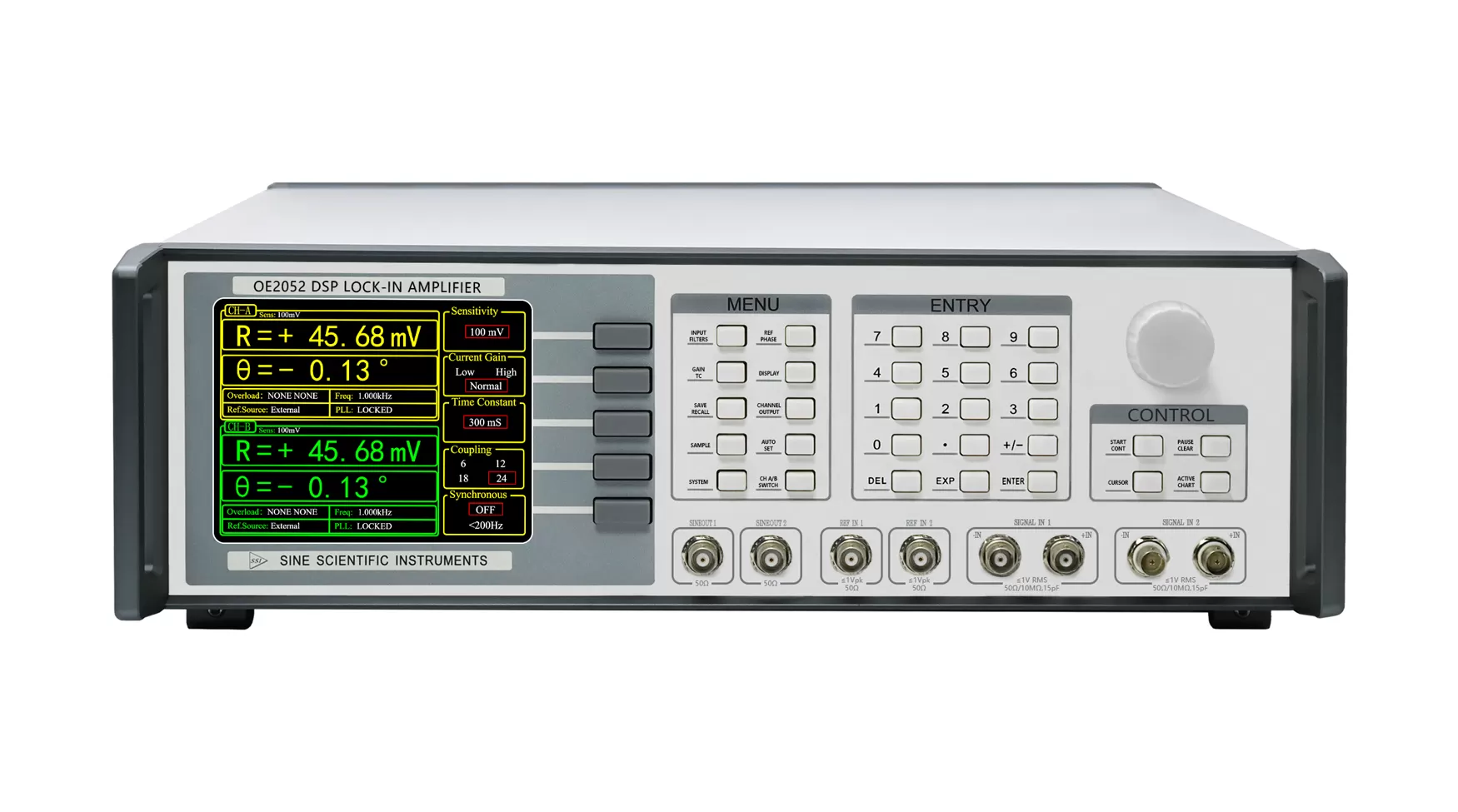
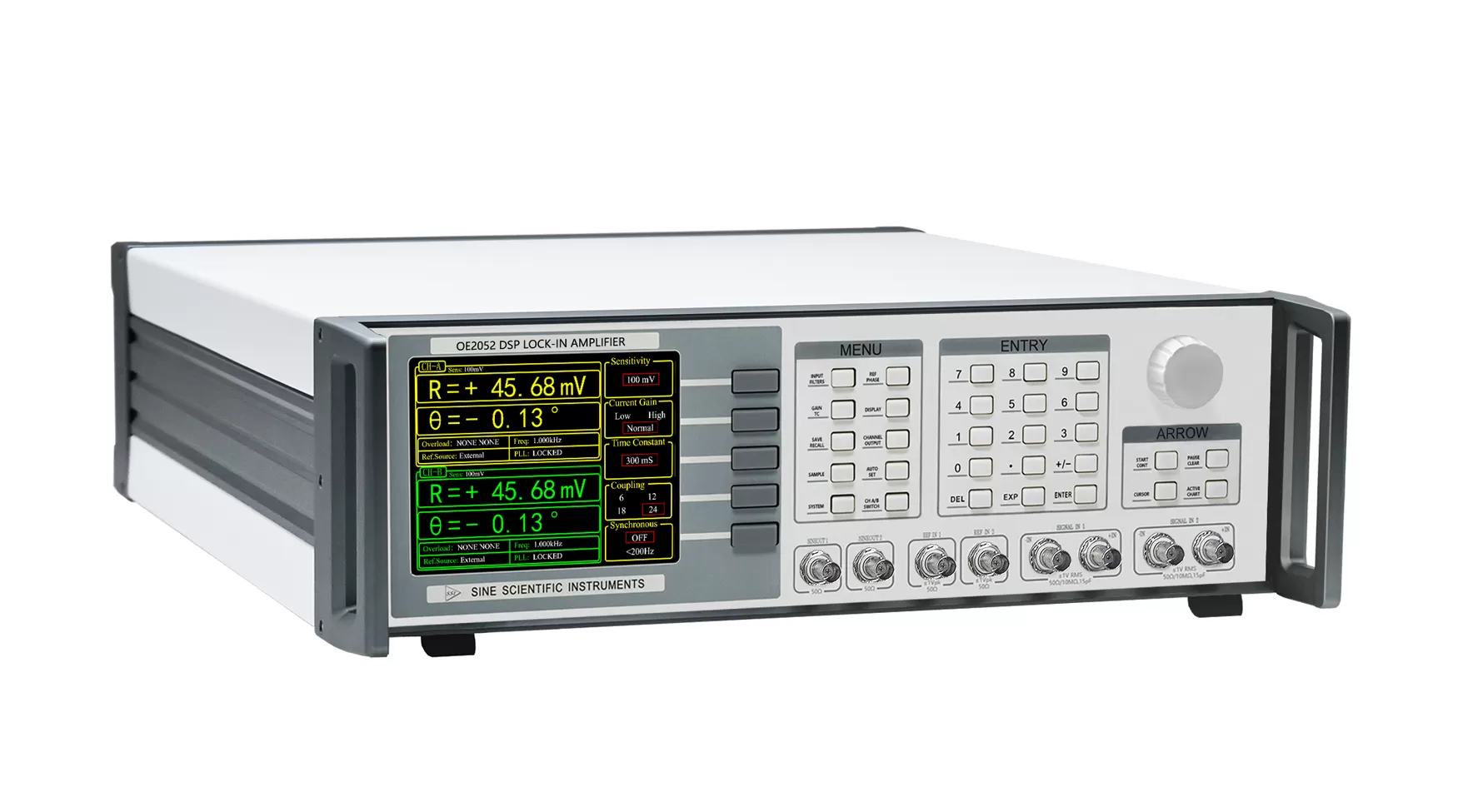
The OE2052 is equipped with a low-noise analog front-end amplifier, capable of efficiently processing differential or single-ended signals with an equivalent input noise as low as 4nV/√Hz. The channel's input impedance can be selected from 50 Ω or 10M Ω , and the full-scale sensitivity range is from 1nV to 1V, with a dynamic range of more than 120dB.
In addition, the signal input channel adopts a dual ADC design, taking into account the needs of high-speed and high-precision measurements. Users can choose between a high-speed 14-bit ADC (supporting DC to 400MHz band) or a high-precision 24-bit ADC (supporting DC to 100kHz band) according to the actual application scenario.
Based on a 1GSPS 16-bit digital-to-analog converter (DAC), the OE2052 is capable of generating sine wave signals over a frequency range of DC to 400MHz with adjustable DC bias. Under a 50Ωload, the signal amplitude ranges from 1 Vpp to 1.5 Vpp, and the DC bias range is ±1.5 Vdc. For external devices that require a bias voltage, such as electro-optical modulators, the OE2052, with its excellent drive capability, can directly drive the device without the need for an additional level shifting amplifier. The phase of the output signal is synchronized with the instrument's internal oscillator, and the phase offset can be set independently.
The reference signal of the lock-in amplifier can be selected as a sine wave or square wave signal according to the user's actual needs, or the reference signal can be digitally synthesized inside the instrument. When the OE2052 is set to internal reference signal mode, the instrument's internal high-precision oscillator and digital synthesis algorithm will generate a sine wave signal for multiplying with the input signal, and this internal reference signal is almost unaffected by phase noise.
The phase resolution of the internal reference signal can be as high as 1μdeg by digital phase shifting technique. When the OE2052 operates in the external reference signal mode, it can accept a sine wave signal or TTL logic level as the external reference signal, and this signal will be locked by the internal digital phase-locked loop. Based on the frequency of the reference signal, the OE2052 can detect the same frequency of the signal and its harmonics, up to the 65535th harmonic of the fundamental frequency, but the maximum harmonic frequency cannot exceed the upper limit of the measurement bandwidth of the instrument.
The time constant of the OE2052 can be flexibly set from 25ns to 4ks, and users can customize the time constant according to their needs. The filter steepening rate can be selected from 6 to 48 dB/oct in 8 steps. With digital modulation technology and advanced filter structure, the OE2052 offers higher dynamic reserve (>120dB), more accurate phase (absolute phase error <1°), zero DC drift, and excellent quadrature performance than traditional analog lock-in amplifiers. In addition, the OE2052 provides an optional synchronization filter that effectively eliminates the effects of reference signal harmonics, ensuring that the instrument accurately detects low-frequency signals while providing a fast response.
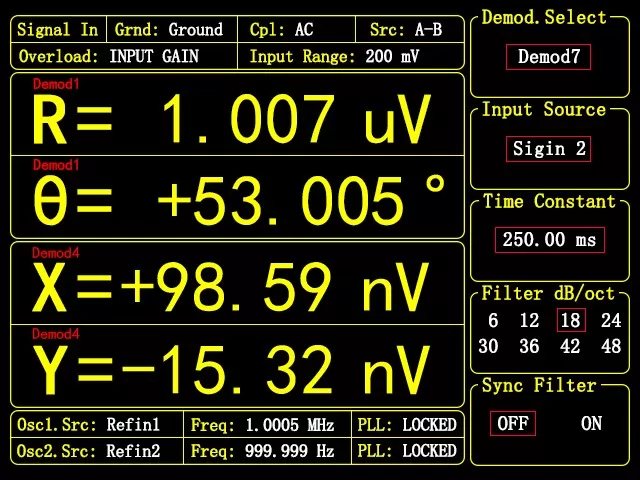
The OE2052 is equipped with a 5.6-inch, 640 x 480 resolution TFT color display, which serves as the main display interface of the instrument and allows full independent control of the instrument through the keyboard. On the display, users can flexibly view the demodulator's X, Y, R, θ and other parameters, and also configure a variety of basic settings such as filter constants, making operation intuitive and convenient.
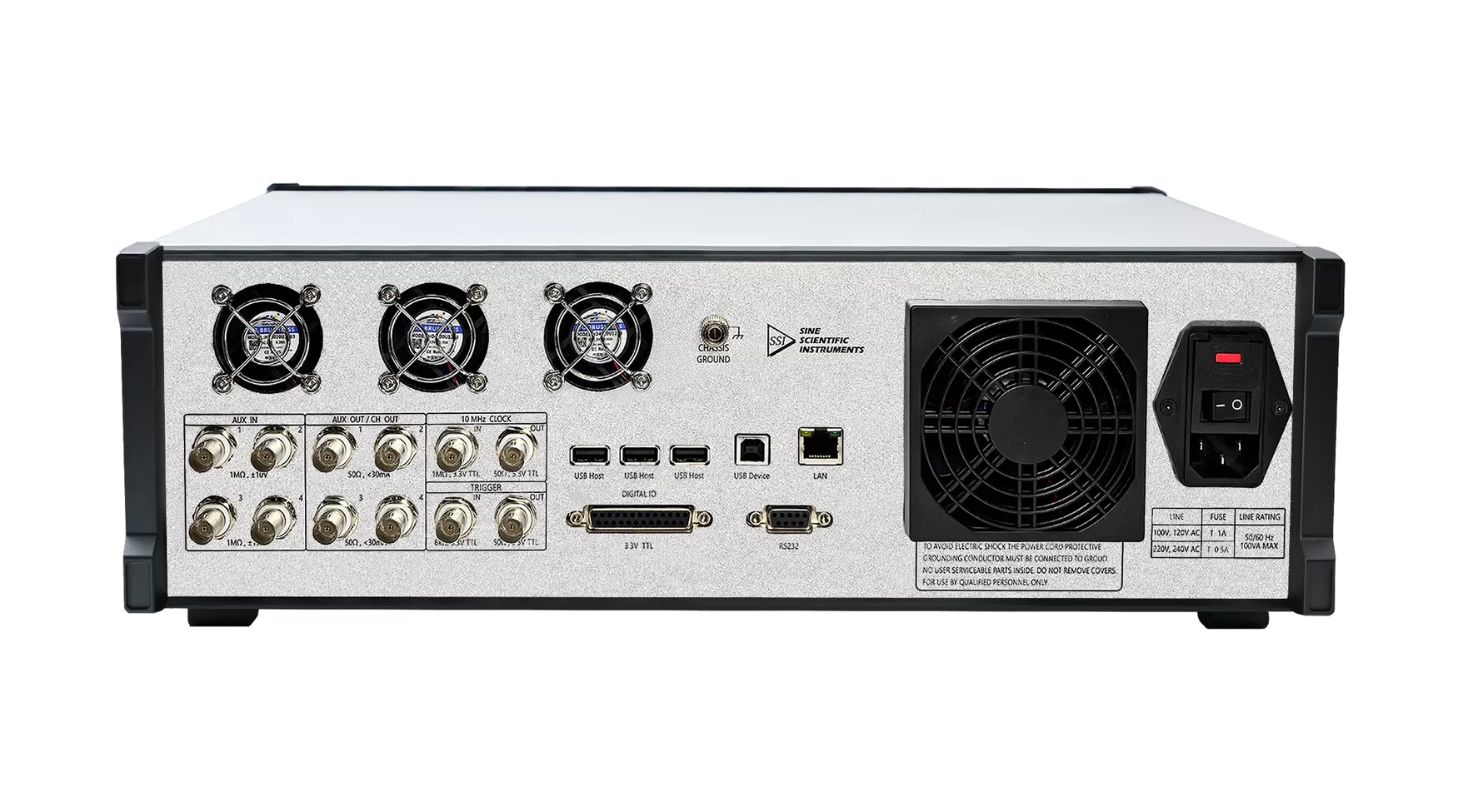
The OE2052 has USB2.0 (host and slave interfaces), 1000Mbps RJ45 network port and RS232 serial port. Through each communication interface, users can effectively use all the test functions of OE2052 on the control computer, set up reasonable control parameters of the instrument and read the data measured by the instrument.
OE2052 also provides users with professional software, each demodulator, input channel and output channel of the lock-in amplifier can be configured through the schematic block diagram or control panel, which is both professional and practical as well as simple and intuitive. The software has a clear numerical display and real-time display of waveforms, and the measurement results can be saved in a csv file output for subsequent analysis by professional software, making the test easy to handle. In addition, we also fully support Python, MATLAB and LabVIEW multi-language application program interface (API).
| Frequency range | DC to 400MHz |
| Voltage Input Mode | Single-ended or Differential |
| Full-scale sensitivity | 1 nV to 2 V in 1-2-5 multiples step order |
| Input impedance | 50 Ω or 10 MΩ//15 pF, AC or DC coupled |
| Dynamic reserve | >120 dB |
| Gain accuracy | 0.2% standard, 1% maximum |
| Equivalent input noise | 4 nV/√Hz (> 100kHz) |
| Analog-to-digital conversion | 14bit, 1GSa/s |
| Inputs: | |
| Frequency range | DC to 400MHz |
| Reference Input | Square or Sine Wave |
| Input impedance | 50Ω or 10 MΩ//15 pF, AC or DC coupled |
| Square reference level | VIH>3V, VIL<0.5V |
| Sine reference signal | >1 Hz |
| >300 mVpp | |
| Phase: | |
| Resolution | 1u° |
| Absolute phase error | <1° |
| Differential phase error | <0.001° |
| Harmonic detection | 1 - 65535F (nF < 400MHz) |
| Acquisition Time: | |
| Internal reference | Instantaneous acquisition |
| External reference | 100 signal cycles or 1.5 ms (>100kHz) |
| Frequency range | DC to 400MHz |
| Frequency resolution | 1 uHz |
| Sine amplitude: | 1uVrms to 1.5 Vrms |
| Resolution | 1uVrms |
| Tolerance | 0.5% standard, 1% maximum |
| Temperature stability | 100 ppm/℃ |
| Bias range | ±3V |
| Output Impedance | 50Ω |
| Number | 4 |
| Input Signal Selection | Signal Channel CHA or Signal Channel CHB |
| Stability: | |
| Digital output | No zero drift for all settings |
| Display | No zero drift for all settings |
| Harmonic rejection | -90 dB |
| Time constant | 25 ns to 4.4 ks 6,12,18,24 dB/oct steepest fall-off |
| Measurement bandwidth | 40uHz to 6MHz |
| Filter drop | 6,12,18,24,30,36,42,48 dB/oct drop |
| AUX Inputs: | |
| Function | 4-channel input |
| Amplitude | ±10 V, 0.1 mV resolution, 0.1% + 20 mV accuracy |
| Impedance | 1 MΩ |
| AUX Outputs / CH Outputs: | |
| Function | 4-channel output |
| Amplitude | ±10 V, 0.1 mV resolution, 0.1% + 20 mV accuracy |
| Drive Current | ±30 mA max |
| Sync Input/Output: | |
| Function | 3.3V TTL external trigger for data storage |
| 10MHz Clock Input/Output: | |
| Function | Instrument clock input/output for multi-computer synchronization |
| Screen | 5.6-inch, 640 x 480 TFT color LCD screen |
| Screen format | Single-channel or dual-channel display |
| Display values | X,Y,R,θ values can be displayed on each channel. |
| Display type | Digital display, bar graph |
| Color Style | Yellow, Green |
| RS-232 | Standard 9-array RS-232 female socket |
| USB2.0 | USB2.0 high-speed communication interface |
| Enternet | 1Gbps Gigabit network communication interface |
| Digital I/O | Bidirectional 16bit |
| Power Requirement: | |
| Voltage | 220-240 VAC |
| Frequency | 50 Hz |
| Power | Standard 90 W, maximum 100 W |
| Power supply noise suppression | 70dB@1MHz |
| Weight | 12 KG |
| Dimension: | |
| Width | 448 mm |
| Depth | 515 mm |
| Height | 148 mm |
| Scanning Microscope | AFM, STM, SPM |
| Materials Science | Carrier mobility, Carrier density, Hall effect, Ultrasonic materials |
| Transport Measurement | Conductivity measurement, lmpedance measurement |
| Noise Represents | Noise density, Cross-correlation measurement |
| Optical Experiment | Spectral analysis, Spectral measurement, THz measurement, TDLAS |
| Sensor Measuring | Gyroscope, Photoelectric sensor, Resonator, Accelerometer |
| Magnetic Sensor | SQUIDs, NV color center, Atomic Magnetometer, VSM |
| Biomedical | Microfluidic |
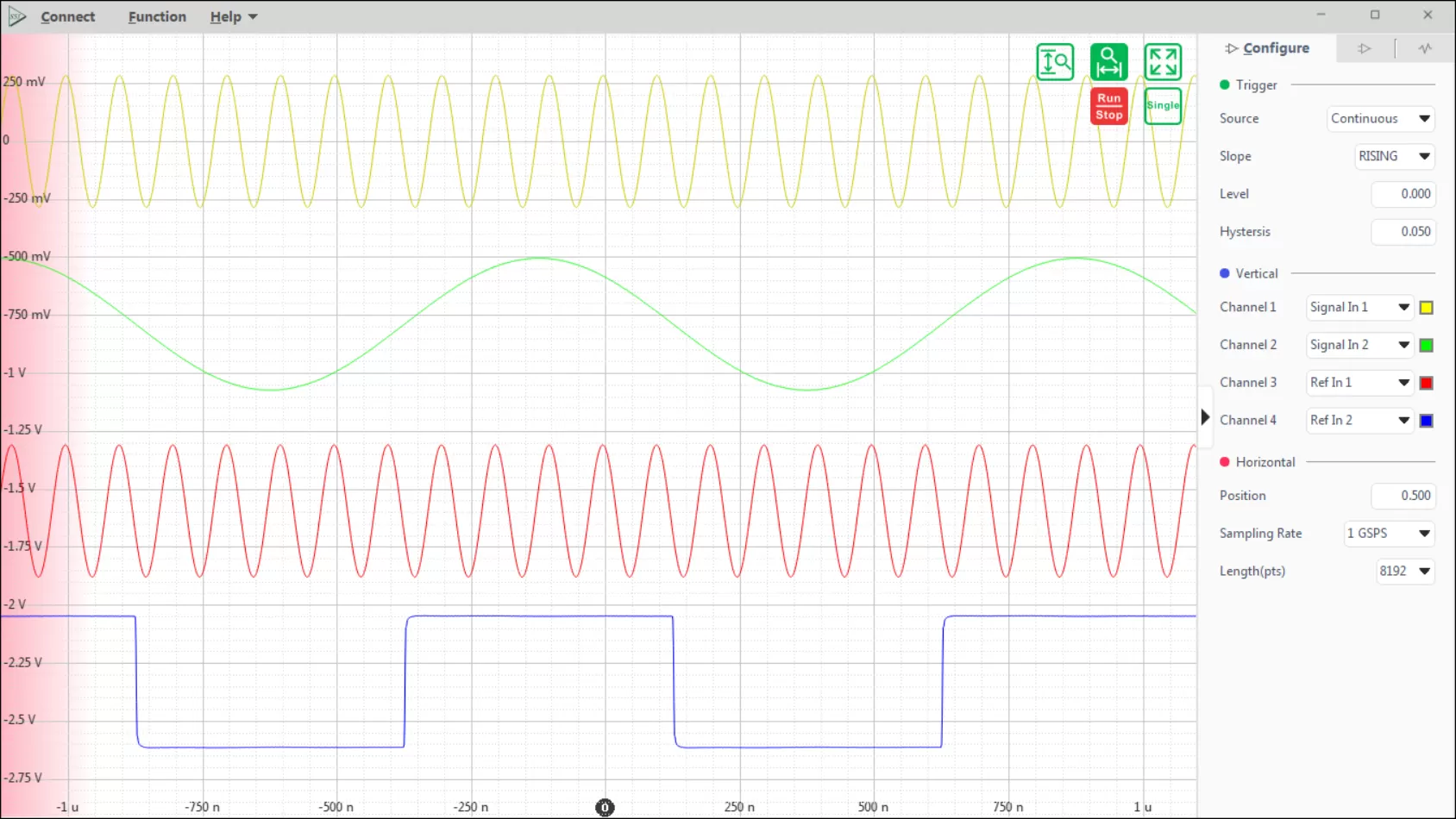
Oscilloscope function with 4 signal channels, selectable signal input, reference input, signal output, auxiliary input and output signals, with a variety of triggering methods, for the user real-time display of time domain signals. Maximum 65536 sampling depth, adjustable sampling time 65us - 1s.
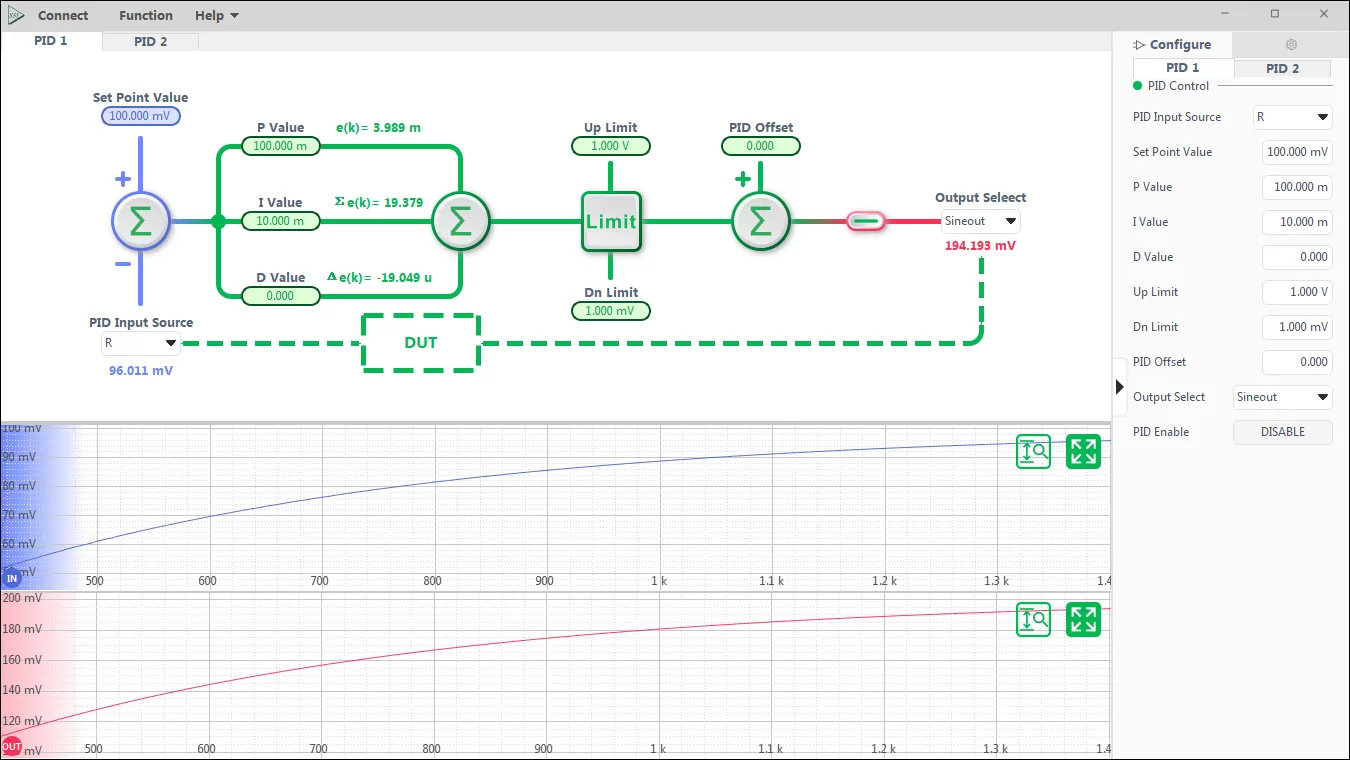
The OE2052 has a built-in independent 2-channel digital PID controller with a sampling rate of up to 4 MSPS, which is tightly coupled with a lock-in amplifier to control the amplitude, phase, frequency and other signals of the output signal according to the measured value of the demodulator, thus realizing the precise regulation of a variety of controlled quantities.
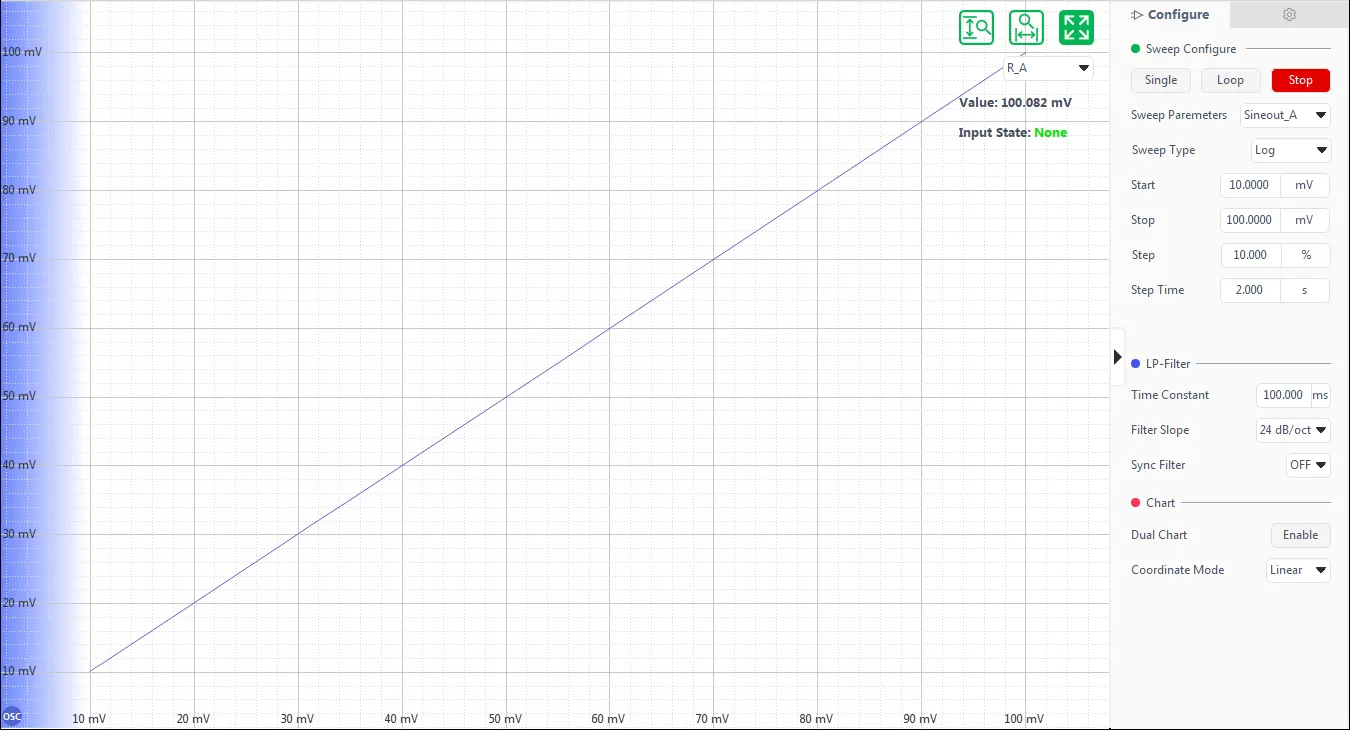
The parameter scanner provides users with convenient and fast scanning for instantaneous plotting of frequency response, amplitude response and other curves, and offers single or cyclic scanning modes.
FFT spectrum analyzers analyze the frequency domain information of a signal based on the waveform captured by an oscilloscope. Depending on the sampling rate, the frequency resolution of the spectrum analyzer is approximately 1Hz - 15kHz.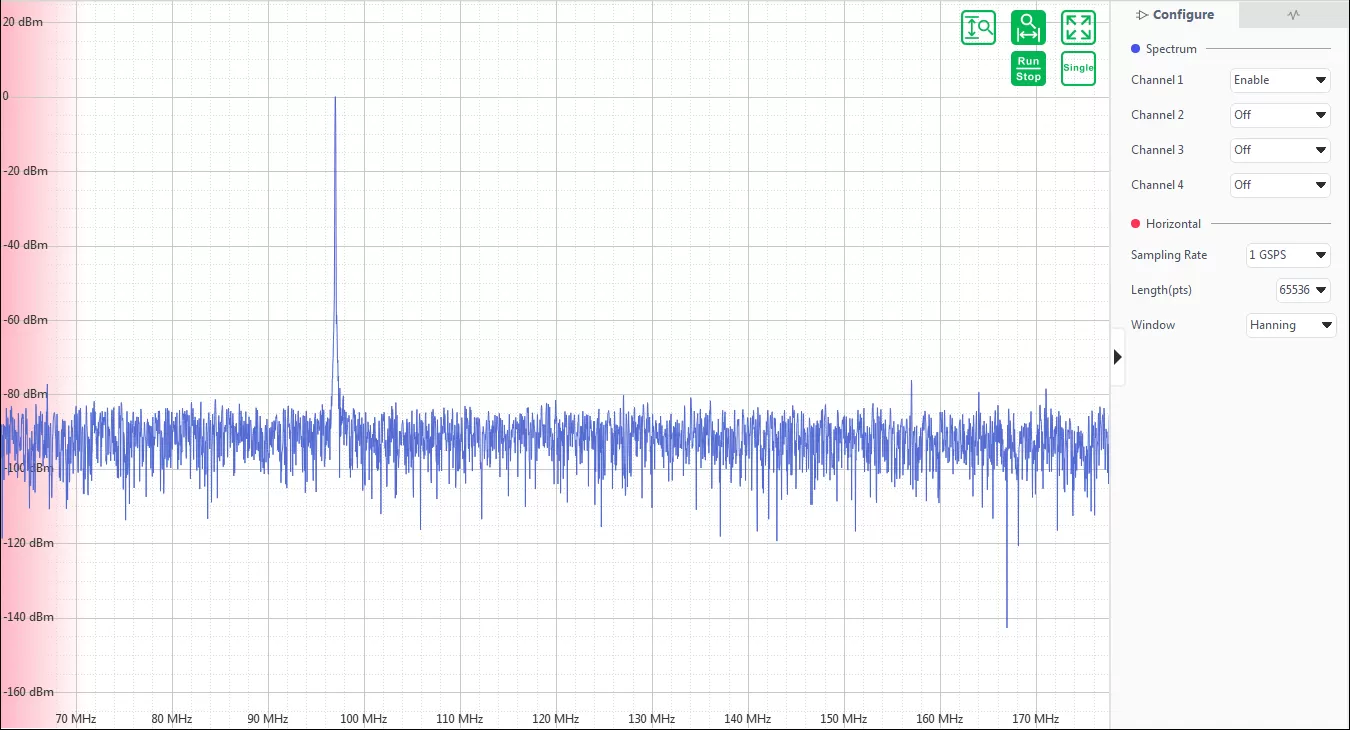
| File name | Explain | Size | Version number | Download |
| OE2052 Introduction Document | Product Introduction Document of OE2052 Lock-in Amplifier. | 2150kb | v250813 |
Download
|